

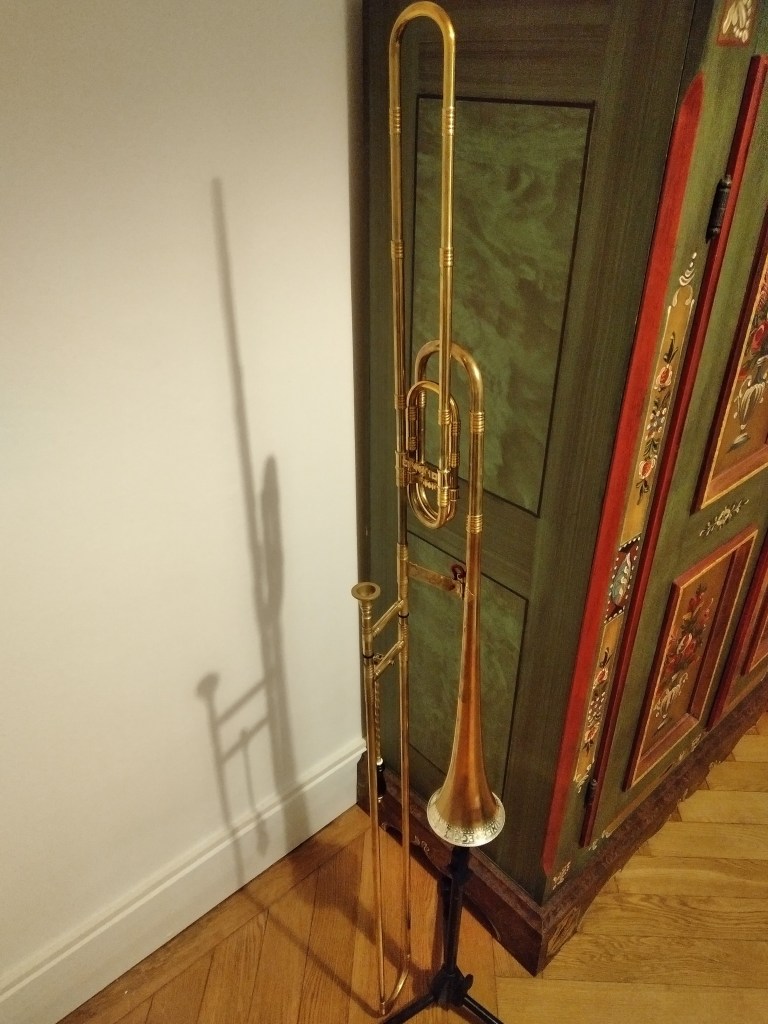
Together with Gerd Friedl at Egger, we designed a new version of their bass sackbut that implements a historical, modular approach to the assembly. The bell section can be entirely disassembled – all connections are friction fit and the stays are held together with pins or set-screws. Aside from the vast options of tunings and pitches this offers, it also gives the instrument a more flexible response and the player more room to colour the sound.
Originally in D at around a=466, this version was adapted to use two different main back bows, a short (whole-tone) crook, a long crook, two different lengths of long tuning slides, and a pair of bits to lower the pitch by around a quarter tone. Through the various combinations of these parts, one can achieve the following tunings, from high to low:
Bass trombone in G
G at a=466, 452, 440, 430, 415 and 392
This is very useful for higher bass parts in baroque music, as well as for the classical repertoire.
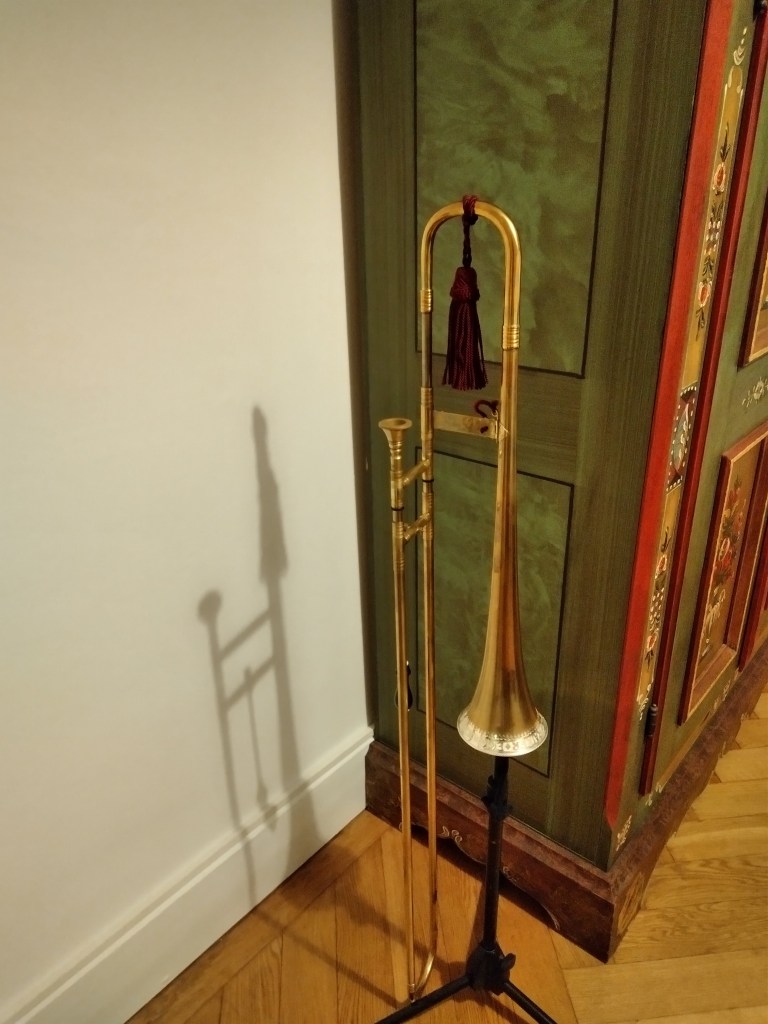

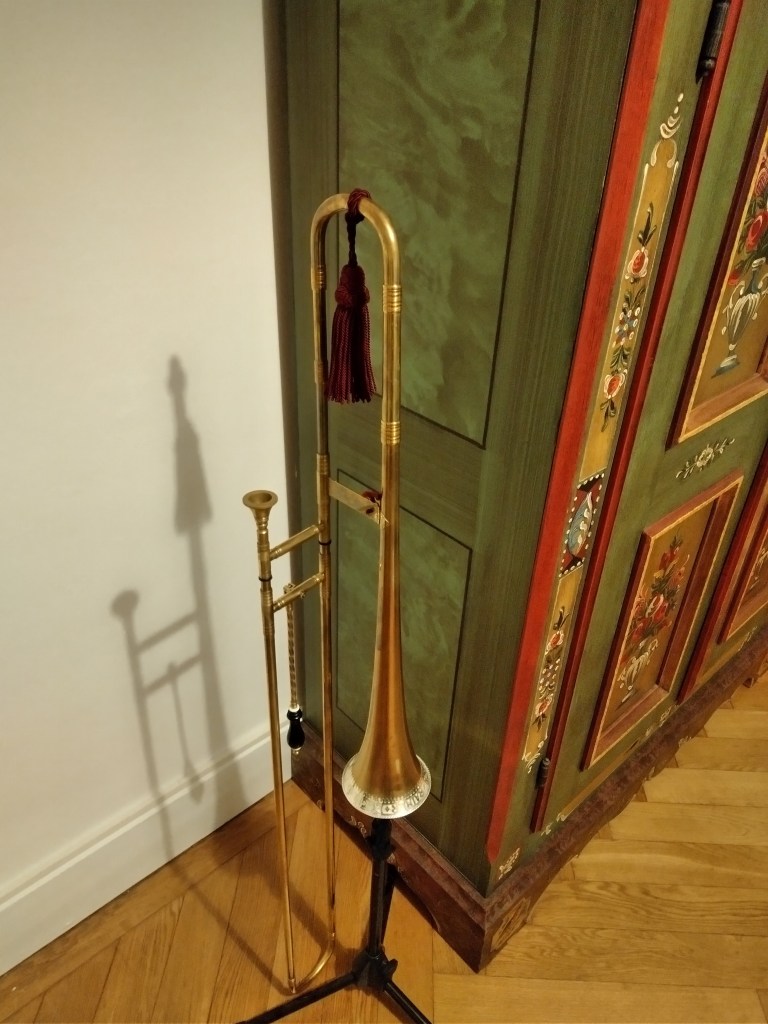
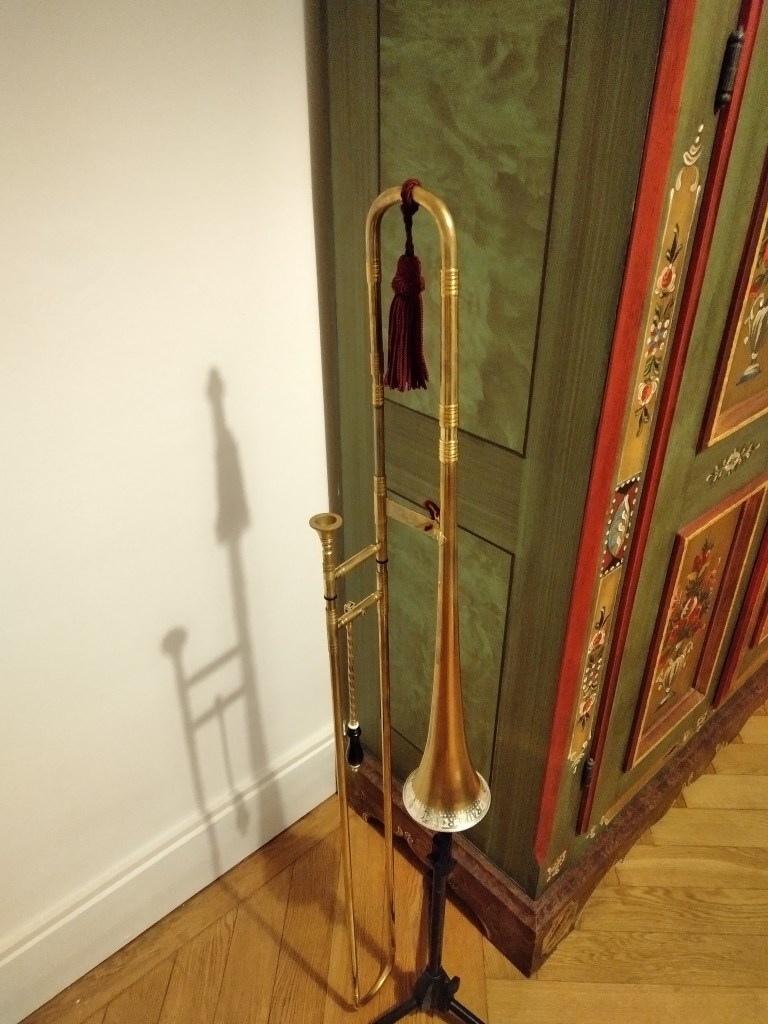
Bass trombone in F
F at a=490, 475, 466, 452, 440, 430 and 415
Used for later baroque and classical repertoires.
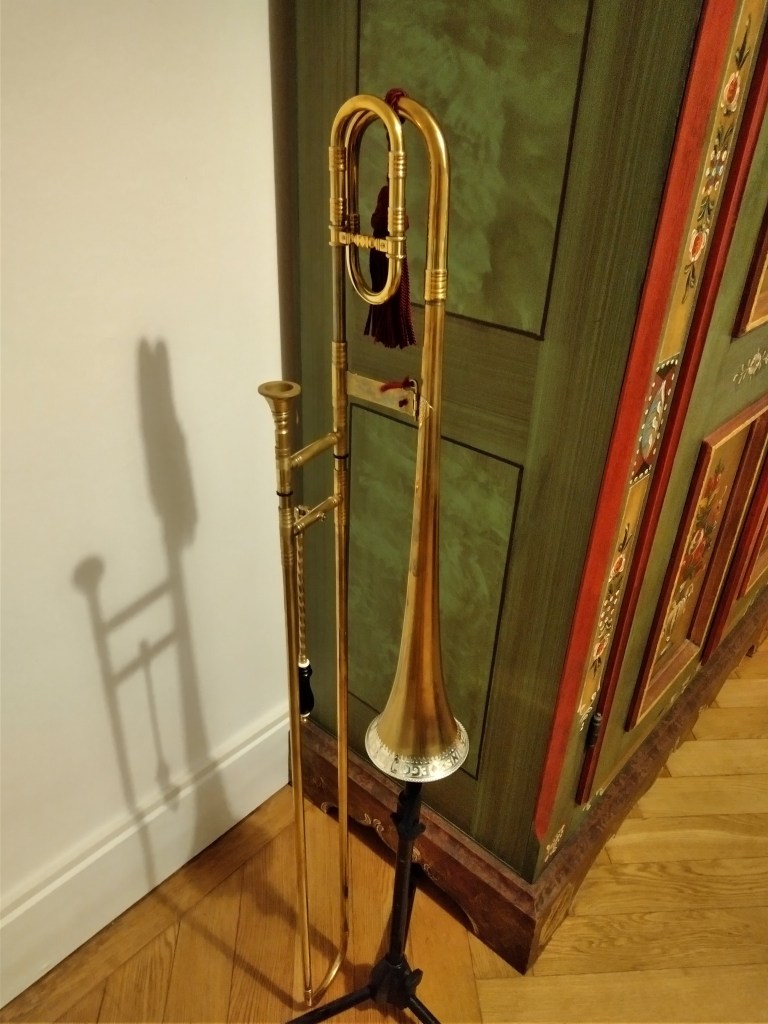
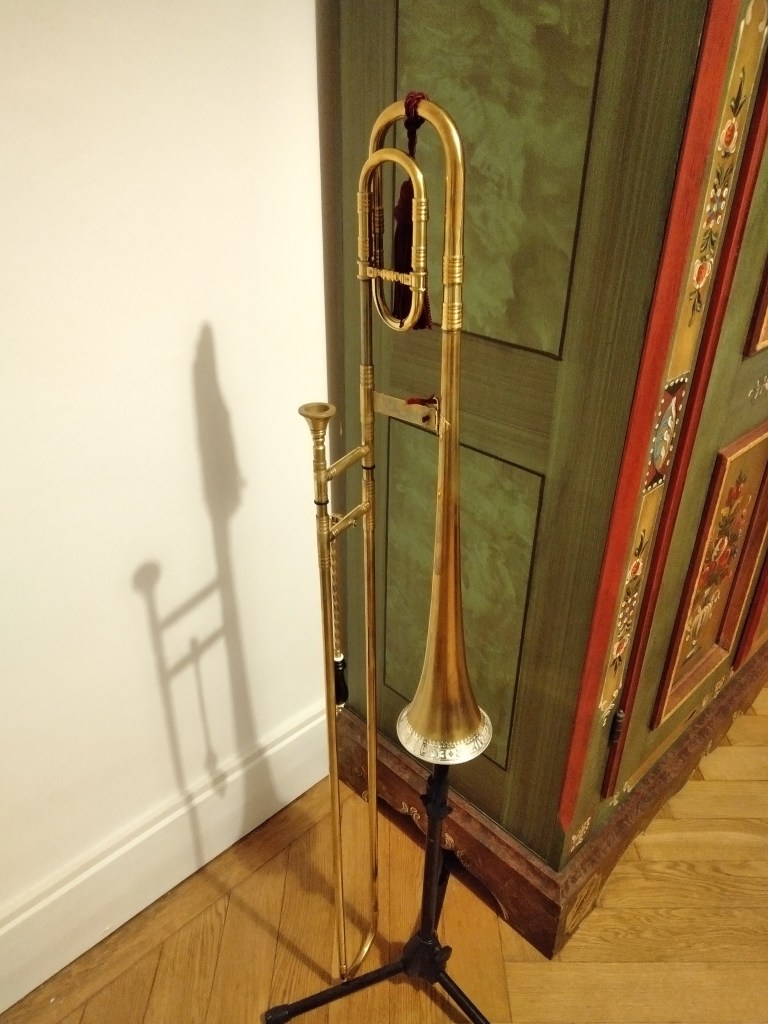


Bass trombone in D
D in any pitch increment, without gap from a=490 to around a=392
This is my primary set-up, and the closest to the original instrument (which is in D at around a=466, with a half-step pull). This is what every source in the 17th century describes as a Quart- or a Quintposaune, and the main form of the bass trombone at the time.
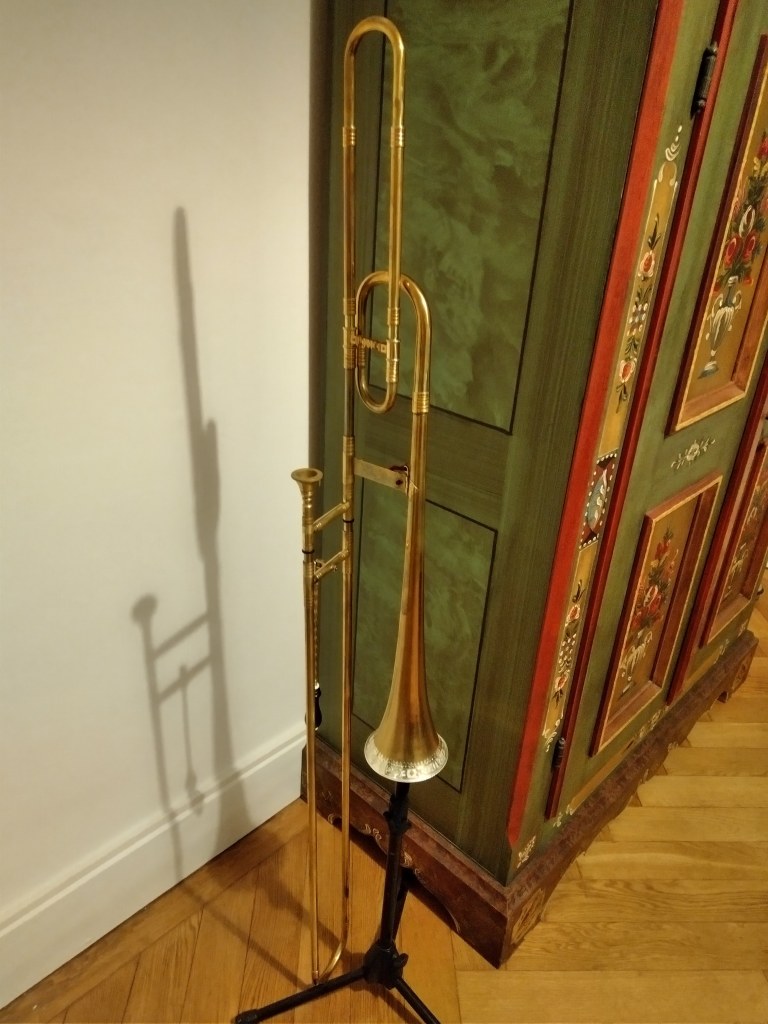
F at a=415
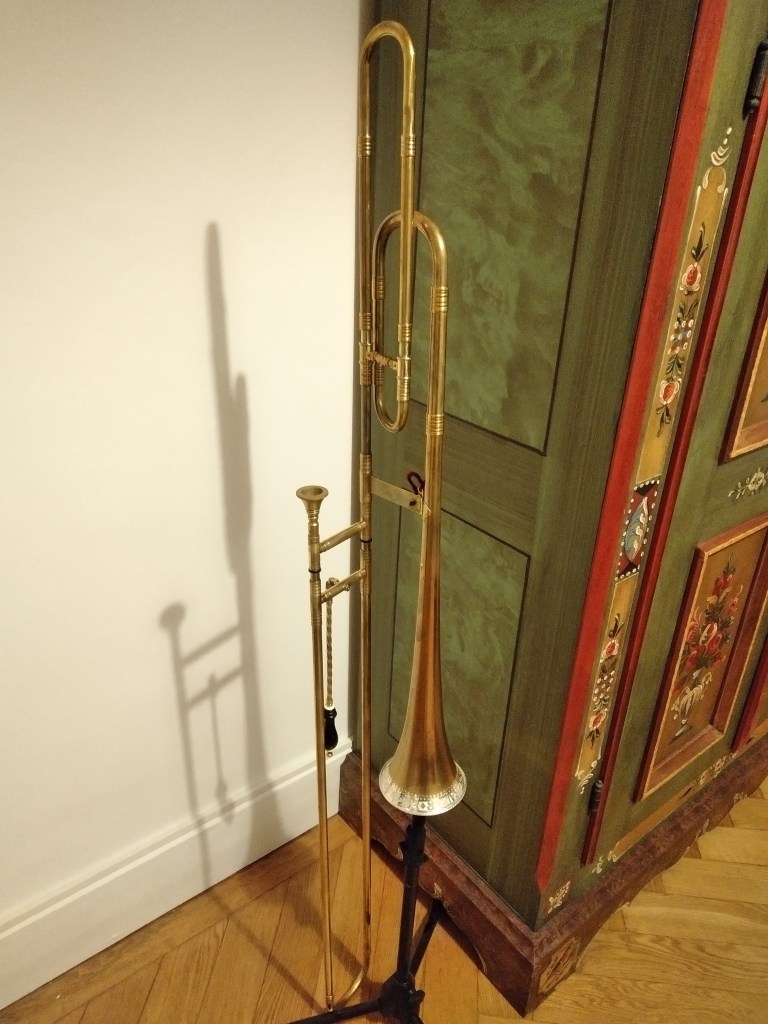
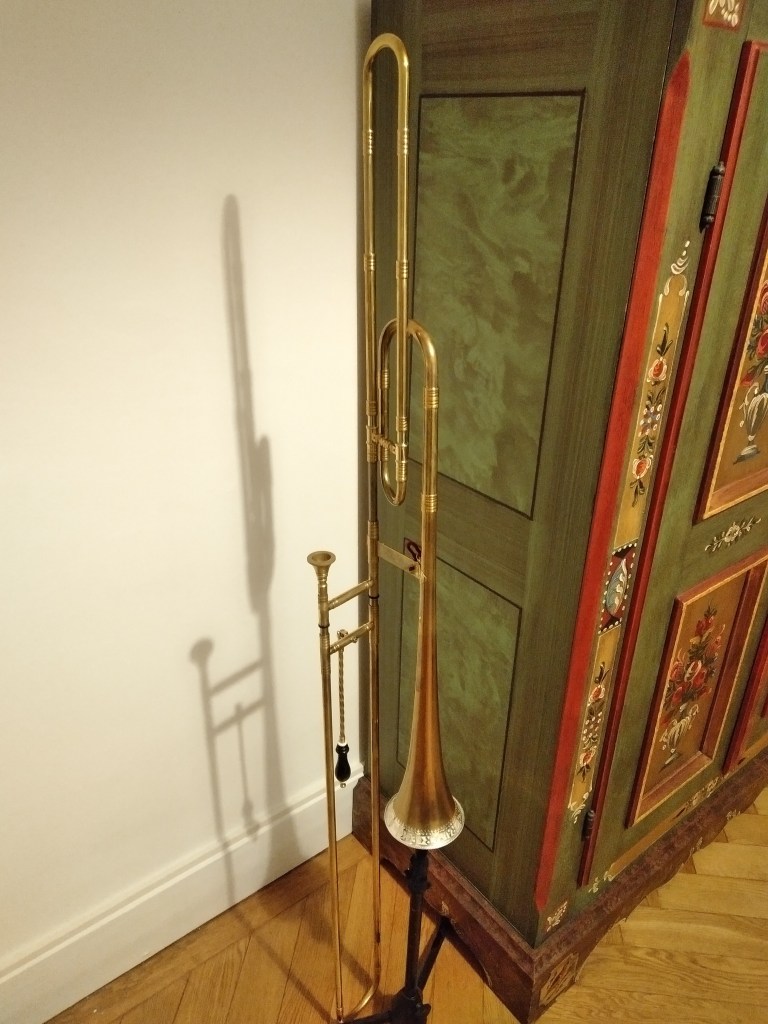
C at a=490 with pull to 466
Bass trombone in C
C at any pitch increment from a=490 to a=440
In Syntagma Musicum II, Michael Praetorius describes two sorts of contrabass trombones (“Oktavposaune”). One is pitched an octave below the tenor, in AA. However, he also describes the possibility of using a particularly large Quartposaune in D (we may consider that the original by Isaac Ehe fits this description) and adding a whole-tone crook, which gives the player any note they should need, down to the low G one octave below Gamma Ut, the same note as the lowest open string of the 12′ violone in G.
On this instrument, this is achievable as Praetorius describes, by adding the whole-tone crook, or, for the higher pitches, using the longer main bow and longest crook and tuning slide.
Tuning pitches lower than a=440 are impractical, as one loses the sixth position.

 Maximilien Brisson